Is the Cruise Ship Virus the Next Pandemic?
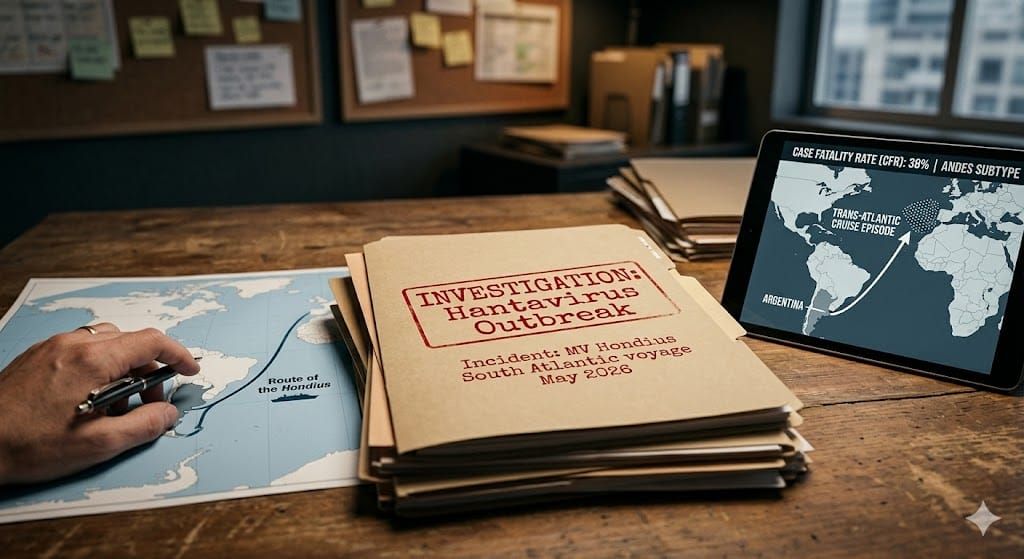
You've probably seen the scary headlines about the MV Hondius cruise ship. But before we panic, let's look at the actual math and science behind the outbreak.
When you hear about a rare virus spreading on a cruise ship and putting people in the hospital, it’s impossible not to think about the early days of COVID-19. But infectious disease experts are strongly warning the public: this is not the same situation.
To understand why experts aren't sounding the alarm for a global lockdown, we have to look at two big statistical factors: how deadly the virus is (mortality) and how easily it spreads (contagiousness). Let’s break down the numbers.
The Scary Number: Mortality Rate
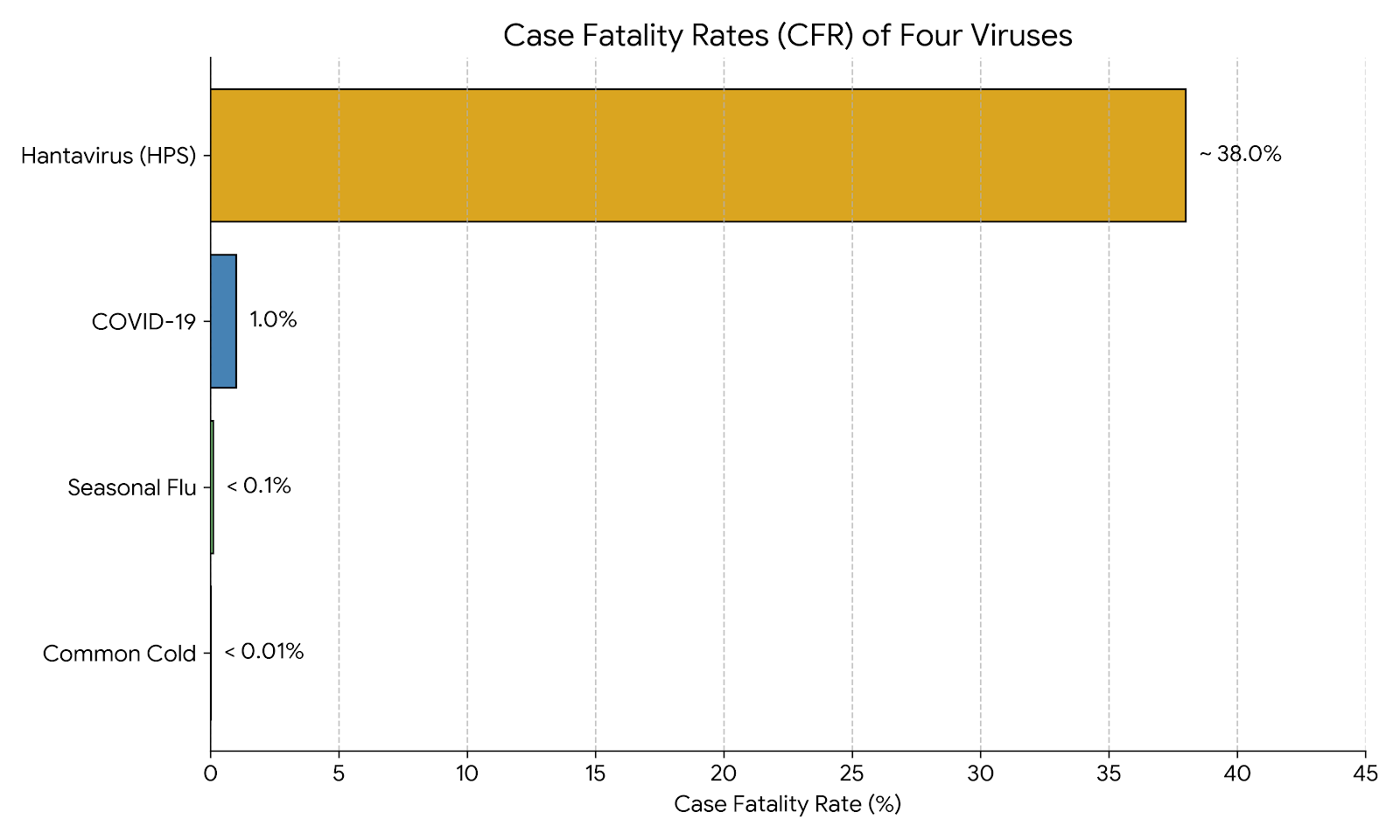
There is no denying that Hantavirus Pulmonary Syndrome (HPS) is a very serious disease.
When researchers look at the "Case Fatality Rate" (the percentage of infected people who tragically do not survive), the numbers are high.
- Globally, the average case fatality rate is around 40%.
- In the Americas, the rate can be up to 50%.
- In some specific areas like southern Chile, mortality among hospitalized patients can approach 60%.
By comparison, COVID-19 has a much, much lower mortality rate today. So, if Hantavirus is so dangerous, why aren't scientists worried about a global pandemic?
The Relieving Fact: Contagiousness
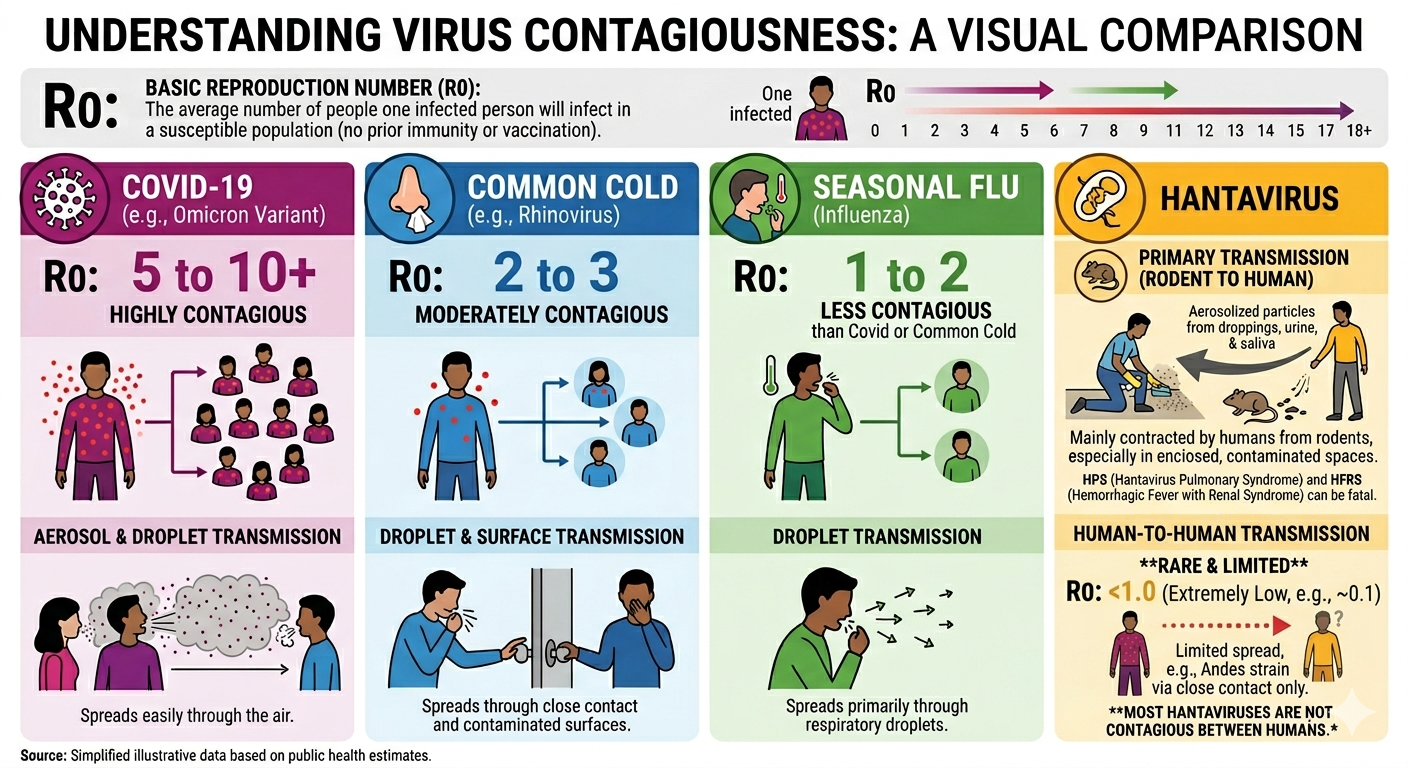
The difference comes down to how a virus travels. COVID-19 is a highly contagious respiratory virus that spreads easily through the air when people breathe or talk.
Hantavirus, on the other hand, is usually only caught by breathing in dust contaminated by infected rodents. While the outbreak on the cruise ship was caused by the Andes subtype—the only strain known to spread from person to person—it is incredibly bad at jumping between humans.
- It requires "close and prolonged contact," usually among household members or people sharing very tight spaces.
- It does not spread easily like COVID-19, where one person could quickly infect five others in a chain reaction.
Even on a crowded ship with 150 people, the virus did not spread rapidly through the whole vessel.
The Verdict: Is this a global threat?
The short answer: No.
Because the virus requires such close contact to spread, health authorities can stop it by finding the infected individuals and placing them in quarantine. The World Health Organization (WHO) currently recommends a 42-day isolation period for those exposed. Thats a crazy amount of time, but is actually what the experts recommend!!
Here is what the top experts have to say:
"This is just not a virus with global pandemic potential. So don't worry about it..." — Dr. David Wohl, Infectious Disease Expert
"My personal worry is essentially zero. The vast majority of the world has absolutely no worry at all." — Bill Hanage, Professor of Epidemiology at Harvard
"This is not Covid, this is not influenza. It spreads very, very differently." — Maria Van Kerkhove, WHO Director of Epidemic and Pandemic Management
The Bottom Line: While this outbreak is a tragedy for the families involved, the danger to the general public is near zero. It is a localized health event that requires careful monitoring by doctors, not panic from the rest of the world.