Iran and Oil
Meet Iran— officially the Islamic Republic of Iran. Once known as Persia, it’s a land of towering mountains, vast deserts, ancient empires, and one of the world’s biggest energy treasures.
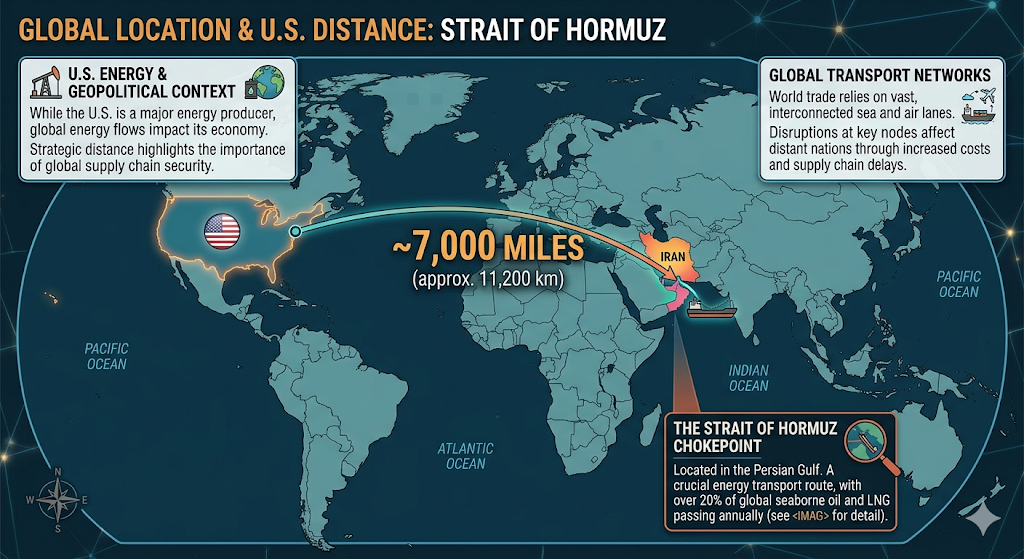
Iran is in the Middle East (Western Asia), bordering countries like Iraq, Turkey, Afghanistan, and Pakistan. It touches the Caspian Sea to the north and the Persian Gulf to the south. If you hopped on a plane from Washington, D.C., and flew straight to Iran’s capital, Tehran, you’d cover about 6,340 miles (10,200 kilometers). That’s like flying from New York to Los Angeles twice! A nonstop flight would take around 12–13 hours, but real trips often involve stops since there are no direct U.S. flights.
Iran has a population of about 93 million people—roughly one-quarter the size of the United States and similar to countries like Germany or Vietnam. It ranks as the 17th most populous country in the world. The capital, Tehran, is a huge, bustling city with millions of residents.
• Age vibe: The median age is about 34.5 years, and Iran has a relatively young population—Around 70% of the population is under 40!
• Where they live: About 74% live in cities.
• Diversity: Most people (around 61%) are ethnically Persian, with big groups like Azerbaijanis (16%), Kurds (10%), and Lurs (6%). It’s a mix!
• Languages and beliefs: The official language is Persian (called Farsi), spoken by nearly everyone. About 90% of Iranians are Shia Muslims, with small communities of other faiths.
The country covers 1.65 million square kilometers (that’s huge—about the size of Alaska plus Texas combined), with a population density of just 57 people per square kilometer. Half the land is desert, but the rest features dramatic mountains like Mount Damavand (over 18,400 feet/5,610 meters high—the tallest volcano in Asia!).
The U.S. and Iran haven’t always been at odds. For decades in the mid-20th century, they were close allies. In 1953, the U.S. (with Britain) helped organize a coup that ousted Iran’s elected prime minister, Mohammad Mossadegh, after he tried to take control of Iran’s oil from foreign companies. This put the pro-Western Shah (king) back in power, and the two countries worked together—including on early nuclear energy deals.
Everything changed in 1979 with the Islamic Revolution. Millions of Iranians protested the Shah’s rule, forcing him to flee. Iran became an Islamic Republic led by religious leader Ayatollah Khomeini. Right after, Iranian students stormed the U.S. Embassy in Tehran and held 52 Americans hostage for 444 days—a crisis that ended all diplomatic ties and still shapes how the countries see each other.
Since then, relations have stayed tense: heavy U.S. sanctions, disagreements over Iran’s nuclear program (a 2015 deal limited it, but the U.S. later withdrew), and no embassies between the two nations.
Iran, Oil, and how it all works….
Imagine the global economy as a massive, intricate engine. Crude oil is the fuel that keeps it running—powering everything from international cargo ships to the factories that manufacture sneakers and smartphones.
Because the countries that need the most oil (like China, India, and parts of Europe) aren't always the ones that have the most oil, we have a massive global trading system. Oil travels across the globe primarily in giant tanker ships, turning the oceans into energy superhighways.
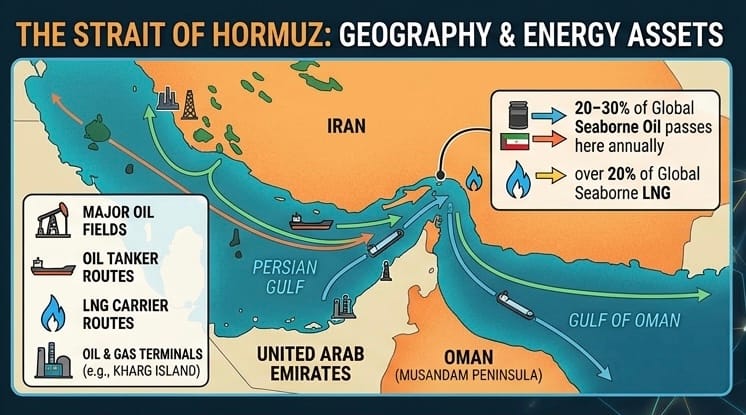
However, these ships are forced to pass through narrow, strategic bottlenecks called chokepoints. The two most critical are:
• The Strait of Hormuz: Located in the Middle East, about 20 million barrels of oil pass through this narrow waterway every single day.
• The Strait of Malacca: Located between Malaysia and Indonesia, this is the busiest transit route in the world, funneling over 23 million barrels daily to power Asian markets.
The Middle East: The Traditional Heavyweights
Historically, the Middle East has been the undisputed king of the oil world. The region is home to massive, easily accessible oil reserves, making it incredibly cheap for them to pump oil out of the ground.
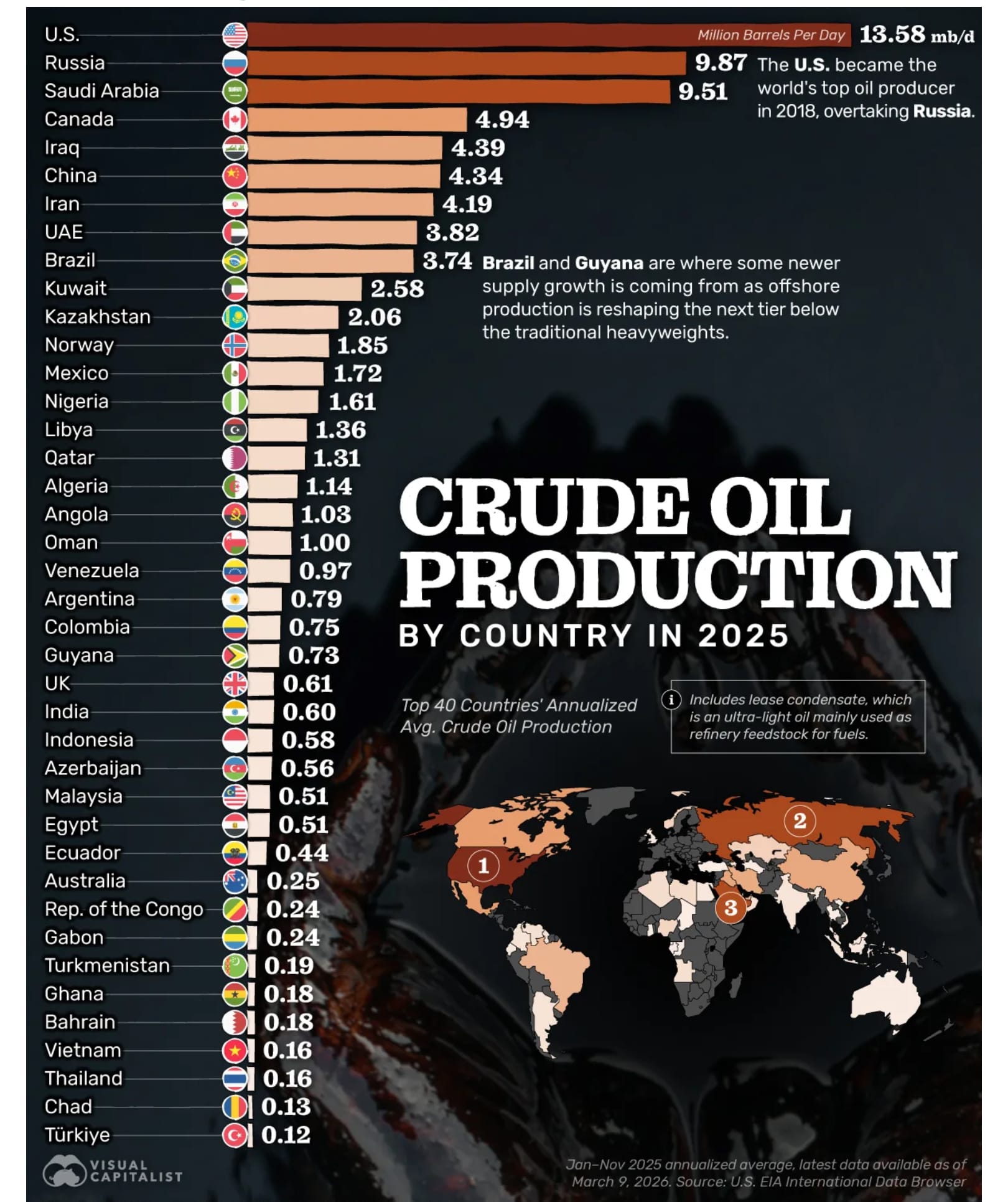
• The Big Players: Five of the world's top 10 oil producers are located here: Saudi Arabia, Iraq, Iran, the United Arab Emirates, and Kuwait.
• Cumulative Impact: Combined, the Middle East produces roughly 25 to 28 million barrels of oil every single day. To put that in perspective, that region alone accounts for over a quarter of the entire planet's daily oil supply. When something happens in the Middle East, global oil prices almost always react.
The U.S. Plot Twist: From Buyer to Boss (2011 vs. Today)
If this were a movie, the United States is the character that completely flipped the script halfway through.
Just 15 years ago, around 2011, the U.S. was producing about 5.6 million barrels per day. It wasn't enough to meet domestic demand, meaning the U.S. was heavily dependent on importing oil from other countries, including those in the Middle East.
Then came the "Shale Revolution." Advances in drilling technology—specifically horizontal drilling and hydraulic fracturing (fracking)—allowed American companies to extract oil trapped deep inside shale rock formations that were previously impossible to reach.
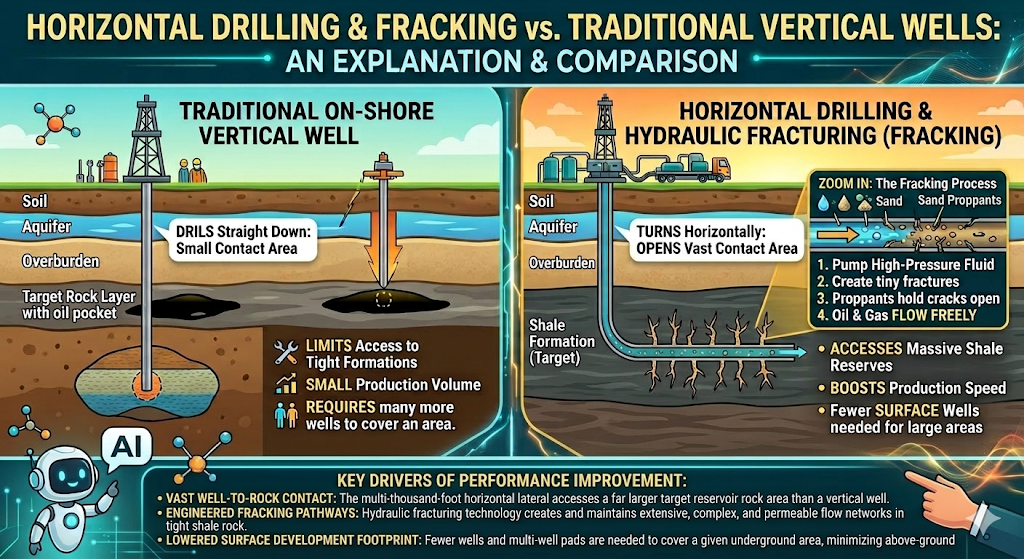
The result? By 2025 and 2026, U.S. production skyrocketed to a record-breaking ~13.6 million barrels per day. The United States is now the undisputed number one crude oil producer in the world, pumping out significantly more oil than both Saudi Arabia and Russia.
The Strait of Hormuz and the current situation….
Imagine a single, narrow hallway in your school. Now imagine that 20% of all the food, supplies, and people your school needs to function has to pass through that exact hallway every single day. If a fight breaks out and that hallway gets blocked, the whole school is going to feel it immediately.
That is exactly what is happening right now in the global economy.
The "hallway" is the Strait of Hormuz—a narrow stretch of water between Iran and Oman that connects the oil-rich Persian Gulf to the rest of the world. And right now, in March 2026, it is at the center of a massive geopolitical crisis that is impacting everything from global shipping to the price of gas in your hometown.
Here is a breakdown of the current situation in Iran, the fight over the Strait of Hormuz, and why it matters to you.
Tensions in the Middle East have boiled over into a major conflict. In late February 2026, the United States and Israel launched a series of significant military strikes against Iran. This military action resulted in the death of Iran’s Supreme Leader, Ali Khamenei, and heavily targeted Iranian military facilities.
In retaliation, Iran’s military and its Revolutionary Guard Corps (IRGC) decided to use their most powerful economic weapon: they effectively blocked the Strait of Hormuz.
How Do You Close an Ocean?
Iran didn't build a physical wall across the water. Instead, they made it entirely too dangerous for commercial ships to pass through.
The Strait of Hormuz is incredibly narrow—the shipping lanes are only about two miles wide in either direction. Iran's coastline runs right along it. In recent weeks, Iranian forces have used drones, missiles, and heavily armed fast-boats to attack commercial oil tankers and cargo ships attempting to pass through.
Because of these attacks, the cost to insure a cargo ship has skyrocketed to record highs. Major shipping companies, oil corporations, and commercial operators have simply refused to send their crews and multi-million-dollar ships into what is now an active warzone. For most of the world, the strait is essentially closed.
To understand why the world is panicking, look at the numbers. Normally, about 20 million barrels of oil pass through the Strait of Hormuz every single day. That is roughly 20% of all the petroleum liquids the entire world consumes daily.
When you suddenly subtract that much oil from the global market, panic sets in. The law of supply and demand takes over: with less oil available, the price of the oil that is available shoots up.
Because of this blockade, the international benchmark price for crude oil has soared to around $100 a barrel. This directly translates to higher prices at the pump for average Americans. Furthermore, because almost everything we buy is transported by trucks, ships, or planes that rely on fuel, higher energy costs generally lead to higher prices for groceries, clothes, and everyday goods (inflation).
What Happens Next?
Reopening the Strait of Hormuz is proving to be incredibly difficult.
The U.S. military has deployed thousands of Marines to the region and has heavily bombed Iranian missile sites, drone launch pads, and even Kharg Island (Iran's main oil export hub). President Trump has also called on other nations—like European allies, Japan, and China—to send warships to help escort oil tankers safely through the strait. However, many of those countries have been hesitant to join, fearing a wider, more destructive war.
As of right now, the global economy is in a staring contest. The U.S. wants to use military force to prove it can keep global sea lanes open, while Iran is trying to prove that it can inflict massive economic pain on the world if it is attacked. Until the Strait of Hormuz is safe to navigate again, the entire global energy market will remain on edge.