Baseballs looming strike

The Core Issue: To Cap or Not to Cap?
Right now, MLB is the only major professional sports league in North America (unlike the NFL, NBA, or NHL) that does not have a strict salary cap—a hard limit on how much a team can spend on its players.
Instead, baseball uses a "luxury tax" system. Teams can technically spend as much as they want on star players, but if they go over a certain financial threshold, they are slapped with a heavy tax by the league. However, for the richest teams, that tax is often just viewed as the cost of doing business.
⚾ The Owners' Perspective: The "Fair Play" Argument
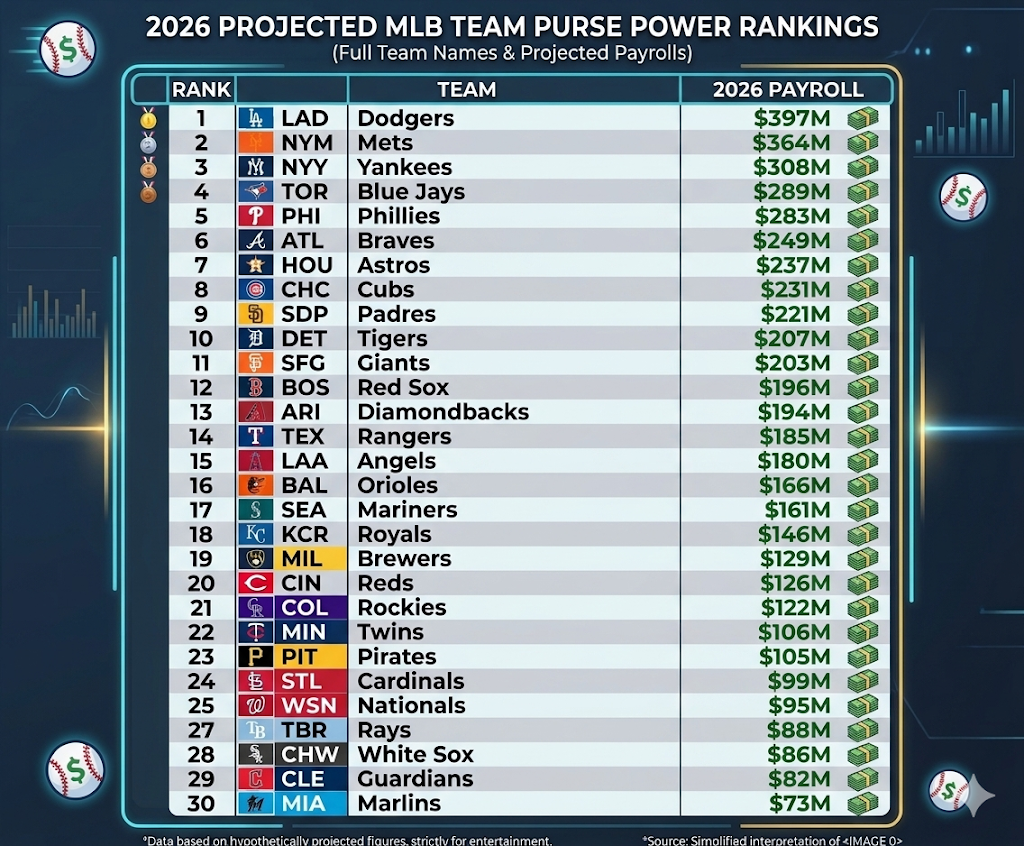
Many team owners—especially those in smaller markets like Pittsburgh, Cincinnati, or Milwaukee—are fed up. They argue that without a salary cap, baseball has become an unfair game of the "haves" and the "have-nots."
When massive-market powerhouses like the Los Angeles Dodgers or New York Mets can effortlessly shell out hundreds of millions of dollars year after year (just look at the Dodgers' recent $240 million mega-deal to poach Kyle Tucker), smaller teams feel they simply can't compete. The owners want a strict salary cap to level the playing field, arguing it will ensure fans in every city have a fighting chance to see their team win a World Series.
🧢 The Players' Perspective: The "Know Your Worth" Argument
The players, represented by the Major League Baseball Players Association (MLBPA), absolutely despise the idea of a salary cap and have fought against it for over 50 years.
To the players, a cap isn't about "competitive balance"—it’s an artificial ceiling designed to suppress their wages and keep money in the billionaire owners' pockets. Their argument is incredibly straightforward: Baseball is booming, and the league is making record profits from massive TV deals, streaming, and merchandise. Since the players are the ones putting their bodies on the line and drawing the fans to the stadium, why should there be an arbitrary limit on what they are allowed to earn?
🛑 The Threat: A Baseball Blackout in 2027?
The current contract that governs all these financial rules—known as the Collective Bargaining Agreement (CBA)—is set to expire at 11:59 p.m. on December 1, 2026.
If the owners draw a hard line and demand a salary cap, and the players refuse to budge, the sport will grind to a halt. This would result in an owner-imposed "lockout." During a lockout, players are barred from team facilities, trades and free agency are frozen, and if the standoff drags into early 2027, we could see Spring Training and regular-season games get canceled.
🗣️ Discussion Starters for the Table
Ready to get the family talking? Toss out a few of these questions between bites:
• The Fan’s Dilemma: Is it fair that a fan in a smaller city has to watch their favorite homegrown players leave for bigger cities just because their local team's owner can't (or won't) match the big-market money?
• The Worker’s Dilemma: If you were the absolute best in the world at your job, would you accept a rule that capped your salary just so other rival companies could stay competitive?
• The Compromise: If the players agree to a "salary ceiling" (a maximum a team can spend), should the owners be forced to agree to a "salary floor" (a minimum every team must spend) so cheap owners are forced to invest in their teams?